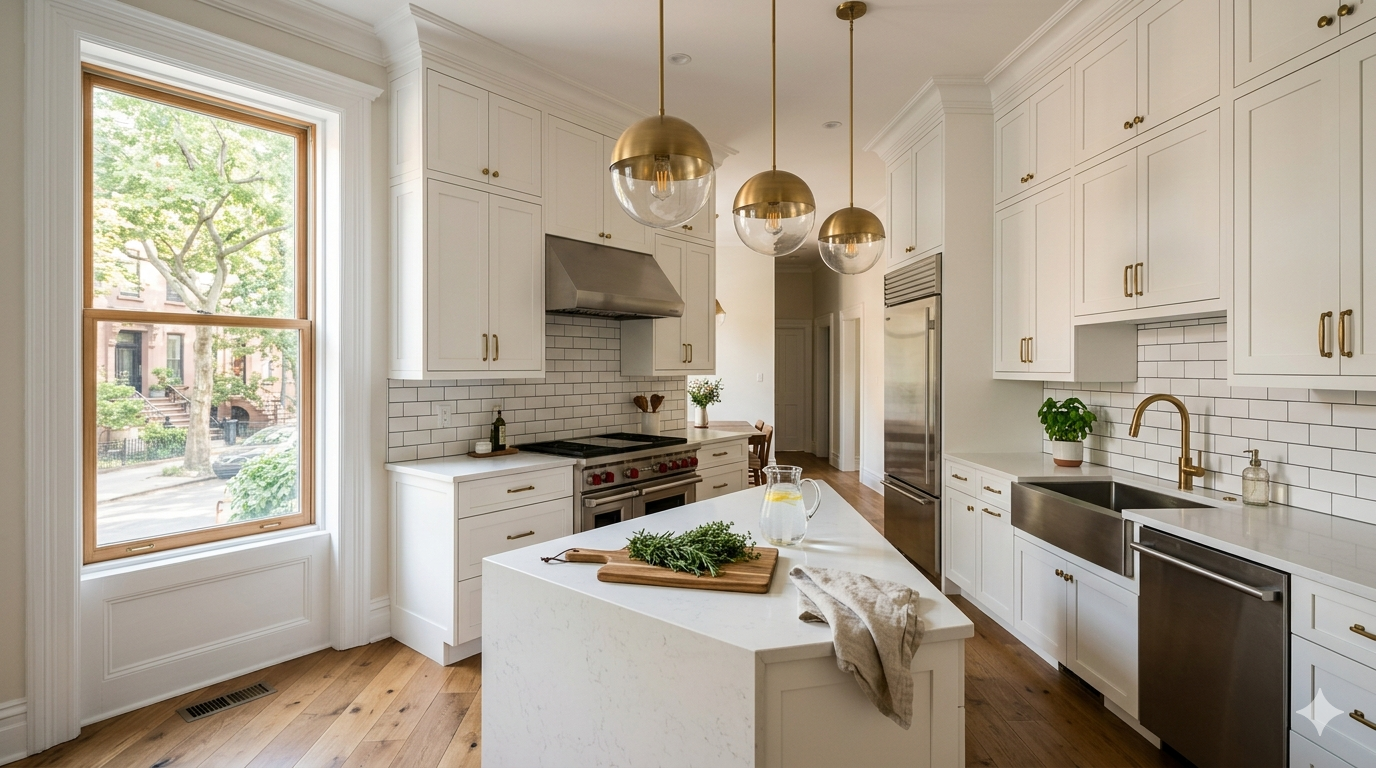

What Is a Gut Renovation? A Complete NYC Guide
The phrase gets used constantly in New York City real estate conversations. A listing describes a unit as a candidate for a gut renovation in NYC. A contractor tells you the building requires it. A buyer’s agent says the price reflects an unrenovated gut job. But what does it actually mean, and how does it differ from a full renovation, a partial remodel, or a cosmetic refresh?
A gut renovation is one of the most significant projects a property owner can undertake. Done correctly, it transforms a functionally obsolete or structurally compromised space into a modern, fully operational home built to current code. Done without the right preparation, it becomes one of the most expensive and drawn-out construction experiences imaginable.
This guide covers everything you need to know before starting a gut renovation in New York City: what the scope actually involves, realistic cost ranges for 2026, typical timelines, the regulatory process, and the signals that tell you whether a gut renovation is the right scope for your property.
What Is a Gut Renovation?
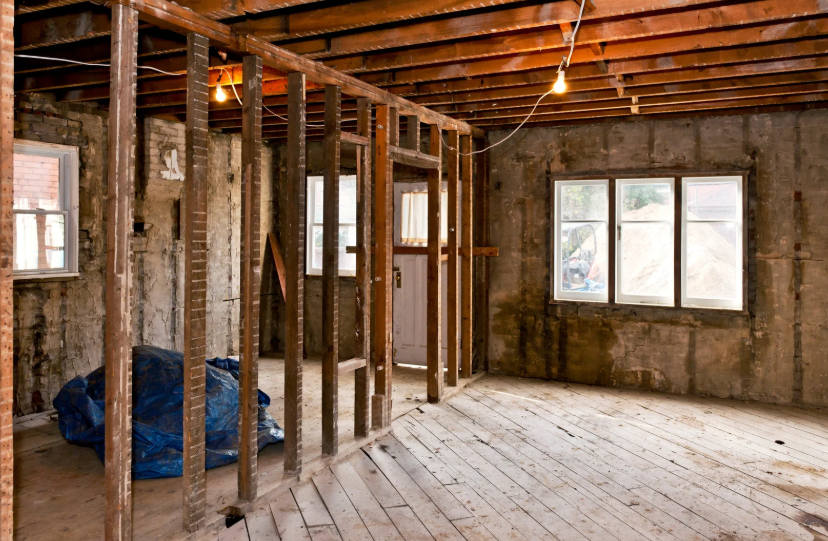
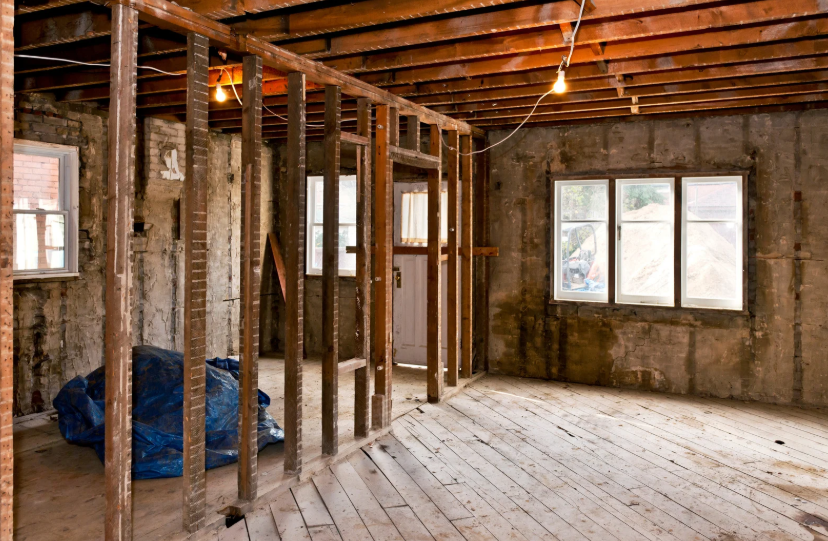
A gut renovation means stripping a property down to its structural frame and rebuilding the entire interior from scratch. In practice, this means removing everything that is not load-bearing: all wall finishes, ceilings, flooring, cabinetry, fixtures, and in most cases, all of the mechanical systems behind the walls.
At the end of demolition, what remains is the structural skeleton of the building. The masonry or concrete exterior walls, the floor joists or concrete slab, the load-bearing walls and columns, and the main vertical plumbing stacks that run through the building. Everything else is gone.
From that point, the renovation rebuilds the entire interior: new framing and furring, new plumbing supply and drain lines, new electrical panel and wiring, new HVAC or heating system, new insulation, new drywall or plaster, new flooring, new kitchen, new bathrooms, new millwork and finishes throughout. The result is, in effect, a brand-new interior inside an existing building envelope.
A gut renovation is distinct from:
- A cosmetic renovation, which replaces finishes (paint, flooring, fixtures) without touching the systems behind the walls.
- A partial or room-specific renovation, which guts and rebuilds one or two rooms while leaving the rest of the apartment in place.
- A full renovation, which may replace all finishes and update systems without necessarily demolishing everything to the structural frame.
The defining characteristic of a true gut renovation is that the existing mechanical systems, not just the finishes, are fully removed and replaced. If the plumbing, electrical, and HVAC are staying in place, it is not a gut renovation.
Gut Renovation vs. Partial Renovation vs. Cosmetic Refresh
Use this table to identify where your project falls on the renovation spectrum before you engage a contractor.
| Cosmetic Refresh | Partial Renovation | Full Gut Renovation | Gut + Layout Change | |
| Scope | Paint, fixtures, finishes only | One or two rooms, systems mostly intact | All systems replaced, finishes rebuilt from scratch | All systems replaced plus walls moved or removed |
| Cost / sq ft | $50 – $150 | $150 – $300 | $350 – $500 (mid-range) | $500 – $800+ |
| Timeline | 2 – 6 weeks | 6 – 16 weeks | 4 – 7 months | 5 – 9 months |
| DOB permits | Usually none | Plumbing and/or electrical | General construction, plumbing, electrical | Structural + full mechanical permits |
| Best for | Updated look, good bones | Single room upgrade | Aging systems, full customization | Layout changes, apartment combination |
What Gets Replaced in a Gut Renovation?
Every component of the interior is removed and replaced. Here is a system-by-system breakdown of what that means on a typical NYC gut renovation project.
Plumbing
All supply lines (hot and cold water) and drain lines within the unit are removed and replaced with new copper or PEX supply piping and new PVC or cast iron drain piping. Fixture locations can be moved, subject to the building’s riser configuration and any wet-over-dry restrictions in co-op and condo buildings. This is also the point at which aged galvanized steel pipes, which corrode from the inside and restrict water flow over decades, are finally eliminated.
Electrical
The existing electrical panel is upgraded or replaced, and all wiring throughout the unit is pulled out and replaced with new copper wiring to modern code. This includes new circuits for the kitchen, bathrooms, and any dedicated appliance loads. In pre-war buildings where original cloth or knob-and-tube wiring may still be present, electrical replacement is not optional. It is a safety requirement and a prerequisite for passing DOB inspection.
HVAC and Heating
Steam or hot water radiator systems in pre-war buildings are often retained and rebalanced, but the piping within the unit may be replaced if it is deteriorated. In properties where central air conditioning is being added, the gut renovation phase is the point at which ductwork or refrigerant line sets are run through the framing before walls are closed. Mini-split systems, which do not require ductwork, are a common solution in older NYC apartments where installing central HVAC is not feasible.
Walls, Ceilings, and Floors
All existing wall and ceiling finishes are removed. In pre-war buildings, this typically means stripping original plaster and lath down to the masonry or wood framing. Once the rough-in trades complete their work and pass DOB inspections, new drywall is installed, taped, finished, and painted. Existing flooring is removed down to the subfloor, which is leveled and prepped before new hardwood, engineered wood, tile, or other finish flooring is installed.
Kitchen and Bathrooms
Both the kitchen remodel and bathroom renovation are built entirely from scratch in a gut renovation. New cabinetry, countertops, tile, fixtures, and appliances are installed after the rough-in work is complete and inspected. This is the phase where layout changes happen: moving the kitchen island, reconfiguring the bathroom layout, or adding a second bathroom if the footprint permits.
How Much Does a Gut Renovation Cost in NYC?

NYC gut renovation costs in 2026 range from approximately $350 to $800 or more per square foot for mid-range to high-end finishes. The wide range reflects significant variation in finish level, building type, mechanical complexity, and the extent of layout changes. Here are the key factors that drive where your project lands within that range.
Finish Level
Material selections are one of the largest single variables in gut renovation cost. Semi-custom cabinetry, quartz countertops, and mid-grade tile represent the mid-range. Custom millwork, imported stone, integrated appliances, and designer fixtures push costs toward the high end. The structural and mechanical work tends to cost roughly the same regardless of finish level; it is the kitchen, bathrooms, and millwork where the range expands most significantly.
Building Type and Logistics
Pre-war co-ops and condos, brownstones in Brooklyn and Manhattan, and high-rise towers each carry different cost profiles. Pre-war buildings often have plaster walls that take longer to demolish than drywall, irregular framing that requires custom solutions, and aging systems that present surprises during demolition. High-rise buildings have elevator access restrictions and common-area protection requirements that add logistics cost. Brownstones involve building envelope work and, in landmark districts, LPC approval requirements that add both time and cost.
Soft Costs
Beyond the construction contract, NYC gut renovations carry significant soft costs that must be budgeted separately:
- Architectural drawings and DOB filing fees: $8,000 to $20,000 or more depending on scope and complexity.
- Co-op or condo board fees: renovation deposits of $5,000 to $15,000 (often refundable), plus application, insurance, and move-in/move-out fees.
- Asbestos testing and remediation: required in most pre-1980 buildings before demolition can begin. Testing typically costs $500 to $2,000; remediation varies widely by scope.
- Temporary housing: plan for 4 to 9 months of alternate accommodations and factor that cost into the total project budget.
- Contingency fund: 15 to 20 percent of the construction contract, treated as already committed, not as savings.
Cost by Apartment Size
The table below shows current cost ranges for NYC gut renovations by apartment size, at mid-range and high-end finish levels.
| Apartment Size | Approx. Sq Ft | Mid-Range Cost | High-End Cost | Timeline |
| Studio | 400 – 550 sq ft | $140K – $275K | $220K – $440K+ | 3 – 5 months |
| 1-Bedroom | 600 – 850 sq ft | $210K – $425K | $360K – $680K+ | 4 – 6 months |
| 2-Bedroom | 900 – 1,200 sq ft | $315K – $600K | $540K – $960K+ | 5 – 7 months |
| 3-Bedroom | 1,300 – 1,800 sq ft | $455K – $900K | $780K – $1.44M+ | 6 – 9 months |
| Brownstone / Townhouse | 2,000 – 4,000 sq ft | $700K – $2M+ | $1.2M – $3.2M+ | 7 – 12 months |
NYC Gut Renovation Timeline: What to Expect
A gut renovation in New York City moves through distinct phases, each with its own timeline. Understanding the sequence helps you plan temporary housing, manage expectations, and avoid being surprised by how long the pre-construction phase takes before a single wall comes down.
- Site assessment and design (Weeks 1 to 6): The contractor visits the property, evaluates existing conditions, and prepares a detailed scope of work and written proposal. If architectural drawings are required, this phase also includes design development and drawing preparation.
- Permit filing and board approval (Weeks 4 to 16): DOB applications are filed simultaneously with the co-op or condo board alteration agreement submission if applicable. Board approvals and permit reviews run concurrently but independently. This is typically the longest pre-construction phase and the one most outside the contractor’s direct control.
- Demolition (Weeks 1 to 3 of construction): Once permits are in hand and board approval is received, demolition begins. A full gut demo of a 1,000-square-foot apartment typically takes 5 to 10 working days with a full crew. Debris removal in NYC requires coordination with the building and staging on the street.
- Rough-in trades (Weeks 3 to 10): Plumbing rough-in, electrical rough-in, and any HVAC rough-in occur in sequence after framing is complete. Each trade requires a DOB rough-in inspection before the next phase can proceed and before walls can be closed.
- Inspections and wall closure (Weeks 10 to 14): After all rough-in inspections are passed, insulation is installed and walls are closed with new drywall. Taping, skimming, and finish preparation follow.
- Finish work (Weeks 14 to 24+): Flooring installation, tile work, cabinetry installation, countertop fabrication and installation, fixture installation, painting, and millwork installation happen in sequence. This phase involves the most trades working in close sequence and is where most schedule compression or extension occurs.
- Final inspections and closeout (Final 2 to 4 weeks): DOB final inspections are scheduled for all open permits. After sign-offs are obtained, a punch list walkthrough identifies any remaining items before project closeout.
Total elapsed time from signed contract to final walkthrough: 5 to 9 months for a standard apartment gut renovation, 8 to 14 months for a brownstone or larger townhouse scope.
NYC-Specific Gut Renovation Challenges
New York City gut renovations involve regulatory and logistical layers that do not exist in other markets. An experienced contractor manages these as standard practice. For a property owner who has never been through the process, understanding them upfront prevents surprises.
Co-op and Condo Board Alteration Agreements
Most co-op and condo renovations in NYC require a signed alteration agreement from the building’s board before any work begins. These agreements specify permitted work hours, contractor insurance requirements, approved materials for wet areas, noise restrictions, and the scope of work approved. Preparing a complete, accurate alteration agreement package is one of the most important pre-construction tasks. Incomplete submissions are returned for revision, adding weeks to the approval timeline.
Department of Buildings Permits
Full gut renovations require multiple permits filed separately with the NYC Department of Buildings: a general construction permit, a plumbing permit, and an electrical permit at minimum. Structural work and HVAC additions require additional filings. Each permit involves plan review and approval before a permit is issued, and each trade requires one or more inspections during construction before the permit can be signed off. An experienced contractor files these applications correctly and in the right sequence to minimize review cycles.
Landmarks Preservation Commission
Properties in NYC landmark districts, including much of Brooklyn Heights, Park Slope, and many Manhattan neighborhoods, require LPC approval for any exterior work visible from a public way. On brownstone renovations in Brooklyn and Manhattan, this typically covers window replacements, facade repairs, and changes to stoops or ironwork. Interior gut renovations generally do not require LPC review unless they affect historically significant interior elements. A contractor with LPC experience handles the submission and coordinates approvals without derailing the overall project schedule.
Hidden Conditions in Pre-War Buildings
More than half of NYC’s residential buildings were constructed before 1940. Behind the walls of these buildings, contractors routinely encounter conditions that were not visible during the pre-renovation assessment: deteriorated cast iron drain stacks that require partial replacement, electrical panels that are undersized for modern loads, asbestos-containing materials in floor tiles or pipe insulation, and structural members that have been compromised by prior water damage or improper modifications. This is why the 15 to 20 percent contingency recommendation is not conservative. It reflects the statistical reality of working in the NYC housing stock.
When a Gut Renovation Is the Right Call
Not every property that needs work requires a gut renovation. The following conditions suggest that a gut renovation is the appropriate scope rather than a partial remodel:
- The building has aging galvanized plumbing supply lines that have restricted flow and are approaching end of life. Replacing supply lines requires opening walls throughout the apartment.
- The electrical service is undersized for modern use, or the wiring is original cloth or knob-and-tube. Rewiring the entire apartment requires full wall access.
- The layout is fundamentally dysfunctional and cannot be addressed without moving plumbing, electrical, or structural elements.
- The property is a newly purchased fixer-upper in a building where the unrenovated condition is reflected in the purchase price, and a full renovation is planned before moving in.
- Two adjacent apartments are being combined, requiring demolition of the dividing wall and full integration of two separate mechanical systems.
- Previous partial renovations have left the property with a patchwork of systems from different eras, and a comprehensive approach is the only way to achieve a consistent and code-compliant result.
For a standard apartment renovation in NYC where the systems are in acceptable condition and the layout functions reasonably well, a partial renovation focused on the kitchen and bathrooms often delivers most of the value of a gut renovation at a fraction of the cost and timeline. An experienced contractor can assess the existing conditions during a site visit and help you determine the right scope for your property and goals.
How to Choose a Gut Renovation Contractor in NYC

Choosing the right contractor is the most consequential decision you will make before your gut renovation begins. The right partner for general contracting in NYC at this scope has specific qualifications that go beyond general construction experience.
Verify the following before signing any contract:
- Current NYC Home Improvement Contractor (HIC) license, issued by the Department of Consumer Affairs. Ask for the license number and verify it on the NYC DCA website.
- Registration with the NYC Department of Buildings for permit-required work.
- General liability insurance and workers compensation coverage. Ask for current certificates and verify the coverage amounts meet your building’s requirements.
- Documented experience with gut renovations in your specific property type. A contractor experienced in Manhattan high-rise condos has a different skill set than one experienced in Brooklyn brownstones. Both are valuable, but they are not interchangeable.
- Familiarity with co-op or condo alteration agreement submission processes if your property requires board approval.
- References from completed gut renovation projects of similar scope. Contact those references directly and ask specifically about how the contractor handled unexpected conditions and whether the project finished on time and on budget.
- A detailed written proposal with an itemized scope of work and cost breakdown before any contract is signed. A one-page estimate is not sufficient for a project of this scope.
Your Gut Renovation Starts With the Right Contractor
A gut renovation is the most comprehensive transformation a New York City property can undergo. Stripping the interior to its structural frame, replacing every system, and rebuilding the entire interior from scratch gives you a blank canvas and a home built to current standards. It also requires careful planning, a realistic budget with a healthy contingency, and a contractor who understands the regulatory environment, building logistics, and construction challenges specific to NYC’s housing stock.
The difference between a gut renovation that finishes on time and on budget and one that does not almost always comes down to who is managing the project. Melani General Contractor brings over 22 years of NYC gut renovation experience across all five boroughs, handling every phase of the project in-house from the first permit filing to the final DOB sign-off.
About Melani General Contractor
Melani General Contractor is a licensed, full-service construction and renovation company based in Park Slope, Brooklyn, serving residential and commercial property owners across all five New York City boroughs. With over 14 years of hands-on experience managing gut renovations, apartment remodels, kitchen and bathroom renovations, brownstone restorations, and commercial buildouts, the team handles every phase in-house: DOB permit filings, co-op and condo board submissions, trade coordination, and final inspections.
Melani General Contractor holds a 5-star rating across customer review platforms, consistently recognized for clear communication, on-schedule delivery, and reliable handling of NYC’s complex permitting and building approval processes.
Frequently Asked Questions
Do I have to move out during a gut renovation?
In nearly all cases, yes. A gut renovation involves complete demolition of all interior finishes and systems. There is no plumbing, no kitchen, and no livable condition in the unit during construction. Most NYC gut renovations run 4 to 9 months from demolition to final walkthrough, so you will need to arrange temporary housing for that period. Factor this cost into your total project budget.
Do I need an architect for a gut renovation in NYC?
For most gut renovations that involve plumbing, electrical, or structural work, NYC requires architectural drawings to be filed with the Department of Buildings before permits are issued. Your general contractor will coordinate with a licensed architect or structural engineer as part of the pre-construction process. On simpler gut scopes without layout changes, some filings can be handled without full architectural drawings, but this varies by building type and scope.
How much should I budget for contingency on an NYC gut renovation?
A 15 to 20 percent contingency fund above your construction contract is the standard recommendation for NYC gut renovations. Older buildings routinely produce surprises once walls open: deteriorated plumbing, insufficient electrical capacity, asbestos in floor tiles or pipe insulation, hidden structural issues. Treating the contingency as already spent rather than money you hope to preserve is the right mindset going into a project of this scope.
How long does co-op or condo board approval take before a gut renovation?
Board approval timelines vary significantly by building. Some co-op boards review alteration agreements within 2 to 4 weeks. Others, particularly in larger Manhattan co-ops with formal board processes, can take 6 to 12 weeks or more from submission to approval. Your contractor should submit the alteration agreement package as early in the process as possible, ideally before permits are filed, to avoid having approved permits sit idle while waiting for board sign-off.
What is the difference between a gut renovation and a full renovation?
The terms are often used interchangeably, but they are not the same thing. A full renovation typically means replacing all finishes and updating major systems, but may not require demolition down to the structural frame. A true gut renovation means stripping everything to the studs or masonry: all walls, ceilings, flooring, plumbing, electrical wiring, and HVAC are removed and rebuilt from scratch. A gut renovation gives you a blank canvas. A full renovation gives you improved finishes within an existing framework.
Can I phase a gut renovation to reduce upfront cost?
Phasing is possible but carries trade-offs in NYC. Splitting a gut renovation across multiple phases means the building’s alteration agreement and DOB permit process may need to be reopened for each phase, adding time and soft costs each time. It also typically results in higher total labor costs because trades must be remobilized. For most NYC properties, completing the gut renovation in a single phase is more cost-effective over the life of the project, even if the upfront investment is larger.
Does a gut renovation increase property value in NYC?
A well-executed gut renovation in NYC typically does increase property value, particularly in buildings where comparable renovated units command a premium. Updated mechanical systems, a modern kitchen and bathrooms, and a reconfigured layout that functions better for today’s buyers are all value drivers. The return depends heavily on finish level, neighborhood, and building type. In co-ops and condos, a renovated unit often commands 15 to 30 percent more than an unrenovated unit comparable in the same building.
Planning a gut renovation in New York City?
Contact Melani General Contractor at (718) 283-4154 to schedule a free on-site consultation. We visit your property, assess existing conditions, discuss your goals, and provide a detailed written proposal before any work begins. Our team serves all five NYC boroughs and is available 24/7 for renovation projects and emergency maintenance.