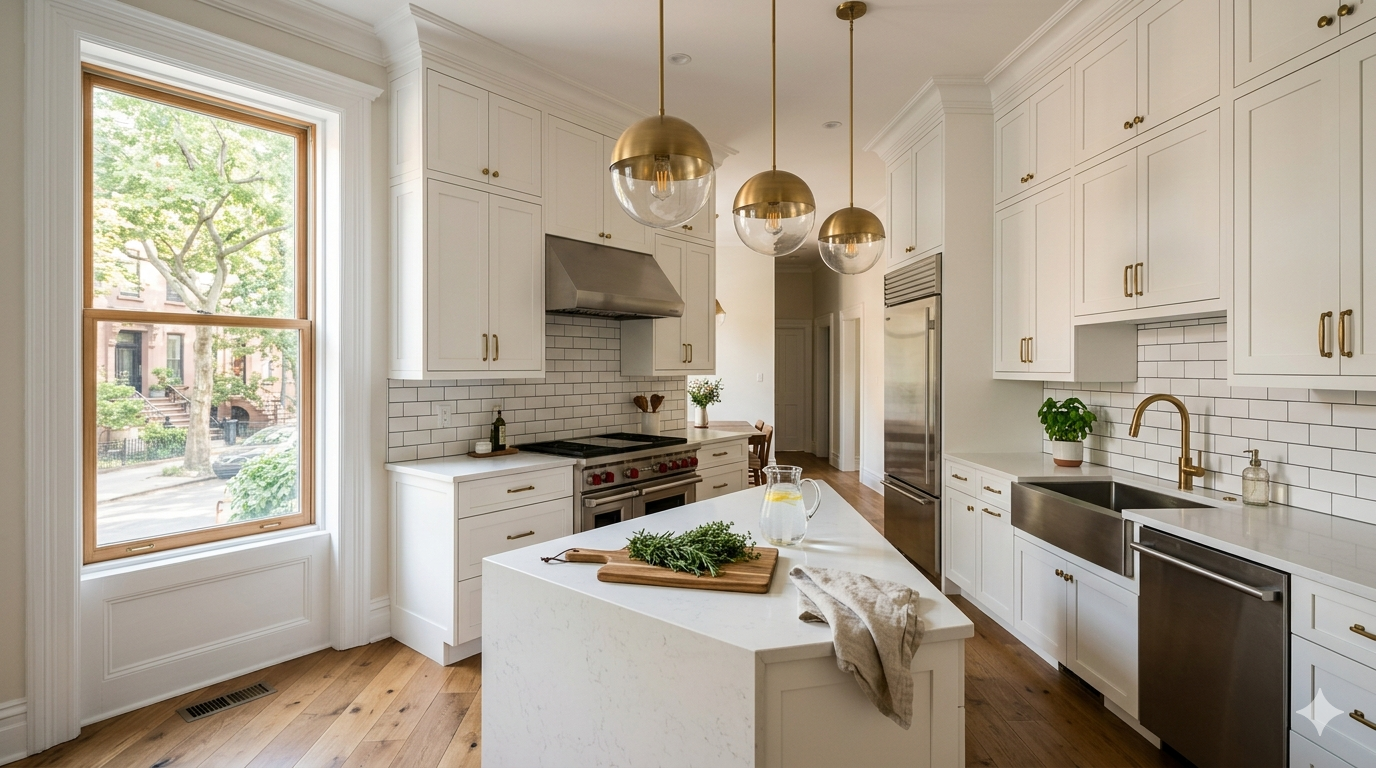

How to Budget for a Home Renovation in NYC
Budgeting for a home renovation in NYC is not the same exercise as budgeting for a renovation anywhere else in the country. NYC labor rates run 40 to 60 percent above national averages. The city’s regulatory environment adds permit fees, board approval processes, and architectural filing requirements that simply do not exist in most other markets. And New York’s aging housing stock introduces a category of cost that no estimator can fully account for in advance: whatever is hiding behind the walls of a building that has been standing for 80 or 100 years.
Understanding how to budget correctly from the start is what separates renovations that finish on time and on budget from those that stall, spiral, or produce a finished product that required painful mid-project compromises to complete. This guide covers every component of a realistic NYC renovation budget: the hard construction costs, the soft costs most people underestimate, the contingency fund that is not optional in this market, and the practical framework for allocating dollars where they produce the best outcome.
Why NYC Renovation Budgets Are Different
Several structural factors make renovation costs in New York City higher than national benchmarks, and failing to account for them leads to the most common budgeting mistake in this market: using a cost estimate based on other regions or outdated data.
Labor Costs
Licensed tradespeople in NYC, including master plumbers, electricians, and finish carpenters, command rates that significantly exceed national averages. Union labor requirements in certain building types and high insurance costs for contractors operating in the five boroughs both contribute. This is not a negotiable variable. It is the baseline cost of operating legally and safely in New York City’s construction market.
Building Logistics
Working in a New York City building means working within constraints that do not exist on a suburban job site. Freight elevator windows limit when materials can be delivered and debris can be removed. Building management offices enforce work hour restrictions, typically 8 a.m. to 5 p.m. on weekdays, which compresses the available construction day. Common areas must be protected with floor coverings and padding. Street permits are required for sidewalk sheds or dumpsters. These logistics add cost on every project.
The Regulatory Layer
DOB permit filings, co-op and condo board alteration agreement submissions, and in some cases Landmarks Preservation Commission approvals add both direct cost and timeline to NYC renovations. The cost of architectural drawings required to file permits, the board fees and deposits, and the time value of waiting for approvals while carrying a mortgage or rent are all real budget components that renovations elsewhere do not carry.
Building Age and Hidden Conditions
More than half of New York City’s residential buildings were constructed before 1940. Behind the walls of these buildings, contractors routinely find conditions that were not visible during the pre-renovation assessment and cannot be priced in the original bid. Deteriorated cast iron drain stacks, galvanized supply pipes approaching end of life, electrical panels undersized for modern loads, and asbestos-containing materials in floor tiles and pipe insulation are standard discoveries in pre-war renovation projects. This is why contingency budgeting is not advisory in NYC. It is structural.
Start With Scope: The Four Renovation Tiers
Before building any budget, establish which renovation tier your project falls into. The difference between a cosmetic refresh and a gut renovation is not just a matter of scale. It determines which permits are required, how long the project takes, and how much risk of hidden cost discovery the project carries. Use this table to position your project before you engage a contractor.
| Cosmetic Refresh | Partial Renovation | Full Renovation | Gut Renovation | |
| Scope | Paint, fixtures, surface finishes | One or two rooms; systems mostly intact | All finishes + system updates; no full demo | Demo to studs; all systems replaced |
| Cost / sq ft | $50 – $150 | $150 – $300 | $200 – $400 | $350 – $800+ |
| Timeline | 2 – 6 weeks | 6 – 16 weeks | 3 – 6 months | 5 – 9 months |
| DOB permits | Usually none | Plumbing and/or electrical as needed | Plumbing, electrical, possibly structural | Full mechanical + structural permits |
| Best for | Fresh look; good bones | Single-room upgrade | Dated finishes + aging systems | Major layout changes; fully obsolete systems |
One important note: NYC renovations frequently move up a tier once conditions are assessed on site. A planned partial kitchen renovation can become a full gut of that room once the contractor opens the walls and finds galvanized pipes or a panel that cannot support the proposed electrical load. This is not a bait-and-switch. It is the predictable reality of working in older buildings, which is why the contingency fund covered in Section 5 is essential.
Room-by-Room Cost Breakdown for NYC Renovations
The following ranges reflect mid-range to upper-mid-range finishes with licensed trade labor in New York City in 2026. Luxury finish levels and high-rise buildings with complex logistics will trend toward the top of these ranges or beyond.
Kitchen
The kitchen commands the largest share of most renovation budgets and delivers the strongest return on investment. A mid-range kitchen remodel in NYC with semi-custom cabinetry, quartz countertops, and quality appliances runs $45,000 to $90,000. A full gut of the kitchen including new plumbing rough-in, electrical service, custom cabinetry, stone countertops, and integrated appliances runs $90,000 to $150,000 or more. Moving the kitchen to a new location in the apartment adds significant cost due to plumbing rerouting and potential structural work.
Bathrooms
A mid-range bathroom renovation in NYC for a standard 5-by-8-foot layout runs $25,000 to $50,000. A primary bathroom or a layout that relocates plumbing fixtures can reach $50,000 to $80,000 or more. The small footprint is deceptive: waterproofing membrane, high-end tile, custom vanity, and fixture installation make bathrooms among the most expensive rooms per square foot in any NYC renovation.
Living Areas and Bedrooms
Living rooms and bedrooms carry lower per-square-foot renovation costs than kitchens and bathrooms because plumbing is not involved. Expect $10,000 to $40,000 per room depending on scope, which might include new lighting circuits, built-in millwork, painting, and flooring. Removing a non-structural wall to open up two rooms to each other typically runs $6,000 to $12,000. A load-bearing wall removal requiring steel and structural engineering runs $20,000 to $40,000 or more.
Flooring
Hardwood refinishing, where original floors are in good condition, runs $7 to $12 per square foot installed. New pre-finished hardwood or engineered wood runs $15 to $30 per square foot installed. Large-format porcelain tile in living areas or kitchens runs $20 to $35 per square foot installed. Most co-op and condo buildings require a soundproofing underlayment beneath new hard surface floors, which adds $8 to $12 per square foot to the flooring budget.
Electrical and Plumbing
A full electrical panel replacement and apartment rewire in NYC runs $10,000 to $25,000 depending on size and complexity. Adding dedicated circuits for a new kitchen or home office runs $2,000 to $5,000 per circuit in a finished apartment. Replacing galvanized supply pipes throughout an apartment with copper runs $8,000 to $20,000 depending on size. These numbers are typically embedded within a larger renovation scope rather than standalone projects, but knowing the trade-level costs helps when comparing contractor proposals.
The NYC Soft Costs Most People Miss

Soft costs are the fees and expenses required to complete a renovation that never appear in the construction contract. In New York City, they are substantial. On a gut renovation, soft costs routinely add $30,000 to $75,000 or more on top of the construction contract. On a major co-op or condo renovation in NYC, board deposits alone can represent $5,000 to $20,000 of tied-up capital before demolition begins. The table below breaks down the most significant soft cost line items for NYC renovations.
| Soft Cost Item | Typical NYC Range | Notes |
| Architectural drawings + DOB filing | $8,000 – $20,000+ | Required for most permit-required scopes; scales with complexity |
| Structural engineering fees | $3,000 – $10,000+ | Required for wall removals and layout changes |
| DOB permit filing fees | $2,000 – $10,000 | Based on project cost; multiple permits may be required |
| Permit expeditor | $3,000 – $8,000 | Manages DOB filings; reduces review cycle delays |
| Co-op / condo board deposit | $5,000 – $20,000 | Refundable after project completion; varies by building |
| Co-op / condo board fees | $1,000 – $5,000 | Application, legal review, admin fees; usually non-refundable |
| Asbestos testing | $500 – $2,000 | Required in most pre-1980 buildings before demolition |
| Asbestos abatement | $3,000 – $15,000+ | Scope depends on materials found; varies widely |
| Temporary housing | $3,000 – $6,000/month | Gut renovations typically require 5-9 months out of unit |
| Contingency fund | 15% – 20% of hard costs | Non-negotiable in NYC; treat as already committed |
A practical rule of thumb for NYC renovations: budget soft costs at 20 to 30 percent of your construction contract for projects involving permits, board approvals, and pre-1980 buildings. For a basic cosmetic refresh with no permits required, soft costs are minimal. For a full gut renovation of a pre-war co-op, they are a material line item that must be planned from the start.
Building Your Contingency Fund
The contingency fund is the single most important budget component for an NYC renovation, and it is the one most often treated as optional until something goes wrong. Treat it as already committed before the project begins.
For any NYC renovation involving permit-required work, budget 15 percent of the construction contract as contingency. For gut renovations of pre-war buildings, where the probability of discovering hidden conditions during demolition approaches certainty, budget 20 percent. If the contingency is not spent, it remains yours. If it is not there when it is needed, the consequences include mid-project financing at unfavorable terms, compromises on materials or finish quality to close a budget gap, or in the worst cases, a project that stops before completion.
What contingency covers in NYC renovations:
- Deteriorated plumbing discovered behind walls that requires replacement beyond the original scope.
- Electrical panels that cannot support the proposed loads, requiring a panel upgrade before the renovation can proceed.
- Asbestos-containing materials discovered during demolition that require licensed abatement before work can continue.
- Structural conditions that were not visible before walls opened and require engineering remediation.
- Scope evolution: the practical decisions made during construction to address conditions that create opportunities or reveal problems. These are not extras. They are decisions made with better information than was available at bid time.
The contingency fund is separate from the soft cost budget. It covers surprises within the construction scope itself, not the permitting and board approval costs that are budgeted separately.
How to Allocate Your Total Renovation Budget
Once you have a realistic sense of total project cost, including both hard construction costs and soft costs, the allocation framework helps you make decisions about where to invest and where to be disciplined.
The 60/30/10 Framework
For a gut renovation or full renovation, a useful starting framework is: 60 percent of the total budget to construction hard costs (labor and materials), 30 percent to soft costs and contingency combined, and 10 percent held as a personal financial buffer for decisions made after the project completes. This is a planning heuristic, not a guarantee. Projects vary, and the actual split depends on your building, scope, and finish level.
Prioritize by ROI
If budget constraints require prioritization, kitchen and bathrooms consistently deliver the strongest return on investment in NYC. A renovated kitchen and primary bathroom can increase a property’s sale price by 15 to 30 percent over an unrenovated comparable in the same building. Flooring is the next highest-impact improvement: consistent flooring throughout all connected living spaces dramatically changes how a home reads. Painting, lighting, and built-in storage follow.
Where to Be Disciplined
Finishes are where most NYC renovation budgets expand beyond plan. Custom imported stone, designer fixtures, and fully integrated appliance packages are compelling in a showroom and real money in the budget. Identifying the two or three design moments that matter most to you and spending there while using quality-but-not-premium materials elsewhere is how experienced renovators control final cost without sacrificing the overall impact of the project.
How to Compare Contractor Bids in NYC
Getting multiple bids is standard practice. Understanding what makes a bid legitimate is what separates a useful comparison from a confusing one. When evaluating proposals for general contracting in NYC, look for the following in every proposal you receive.
What a Legitimate Bid Contains
- An itemized scope of work broken down by trade and room, not a single lump-sum number.
- Specific product and material references, such as cabinet line, tile dimensions, fixture model, or appliance brand, rather than generic descriptions.
- A clear statement of what is and is not included in the bid, including whether permit fees, architectural drawings, and board submission costs are included or billed separately.
- A payment schedule tied to specific milestones, not front-loaded with a large deposit before work begins.
- A realistic timeline with key milestones identified, including the permit filing and board approval phase.
Understanding Price Differences Between Bids
Significant price differences between bids almost always reflect one of the following: different scopes of work (one bid includes permit filing, another does not), different finish specifications (semi-custom versus stock cabinetry), different labor standards (licensed and insured versus not), or a bid that is intentionally low to win the contract with the expectation of recovering margin through change orders during construction.
A bid that is substantially lower than the others without a clear explanation of why is a warning sign. The most common outcome of accepting a bid that is not grounded in real costs is a project that generates change orders that add up to more than the original difference in bid prices, or a project that stops when the contractor runs out of working capital.
Renovation Financing Options in NYC

Most NYC renovations of meaningful scope are financed through a combination of cash and a financing vehicle. Common options include:
- Home equity line of credit (HELOC): Draws against the equity in your property at variable interest rates. Flexible for projects where costs are not fully known upfront.
- Cash-out refinancing: Replaces your existing mortgage with a larger one and provides the difference in cash. Makes sense when current interest rates are favorable relative to your existing mortgage rate.
- Renovation loans: Specific loan products designed for renovation financing, including FHA 203(k) loans for owner-occupied properties. Terms vary; worth comparing against HELOC rates before committing.
- Contractor payment schedules: Well-structured contracts tie payments to milestones rather than requiring full payment upfront. This preserves cash flow and ties payment to verified progress.
Melani General Contractor also offers renovation financing options to qualified clients. Discussing financing early in the planning process, before a contractor is selected and a scope is finalized, gives you the most options and the most time to secure favorable terms.
Build Your Budget on Real Conditions, Not Assumptions
A realistic renovation budget in New York City accounts for far more than the construction contract. The soft costs that NYC’s regulatory and building management environment adds, the contingency that older buildings demand, and the clear allocation framework that keeps priorities in order are what separate budgets that hold from those that break down mid-project.
The most reliable way to build an accurate budget is to start with a thorough on-site assessment by an experienced NYC contractor who can evaluate existing conditions, identify scope-specific risks, and provide a detailed written proposal before any commitment is made. Melani General Contractor offers free on-site consultations across all five boroughs and has managed renovations of every scope in NYC’s five boroughs for over 22 years.
About Melani General Contractor
Melani General Contractor is a licensed, full-service construction and renovation company based in Park Slope, Brooklyn, serving residential and commercial property owners throughout all five New York City boroughs. With over 22 years of experience managing projects across apartments, co-ops, condos, brownstones, townhouses, lofts, and commercial spaces, the team handles every phase in-house: DOB permit filings, co-op and condo board submissions, trade coordination, and final inspections.
Melani General Contractor holds a 5-star rating across customer review platforms, consistently recognized for transparent communication, reliable scheduling, and expert handling of NYC’s complex permitting and board approval processes.
Frequently Asked Questions
How much does a home renovation cost in NYC on average?
It depends heavily on scope. A cosmetic refresh runs $50 to $150 per square foot. A partial renovation of one or two rooms lands at $150 to $300 per square foot. A full renovation covering all finishes and system updates runs $200 to $400 per square foot. A gut renovation, where everything is demolished and rebuilt, ranges from $350 to $800 or more per square foot depending on finish level and building complexity. For a 1,000-square-foot apartment, that puts a mid-range full gut renovation at $350,000 to $500,000 before soft costs.
What are soft costs and why do they matter?
Soft costs are the fees and expenses that are necessary to complete a renovation but do not appear in the construction contract itself. In NYC, they include architectural drawings, DOB permit filing fees, permit expeditor fees, co-op or condo board deposits and application fees, asbestos testing and potential abatement, and the cost of temporary housing during construction. On a gut renovation, soft costs routinely add $30,000 to $75,000 or more on top of the construction contract. Failing to budget for them is one of the most common reasons NYC renovation budgets break down.
How much contingency should I budget for an NYC renovation?
Budget 15 to 20 percent of your construction contract as a contingency fund, and treat it as money already committed rather than a reserve you hope not to spend. In pre-war buildings, 20 percent is the right floor. NYC’s housing stock routinely produces discoveries once walls are opened: corroded galvanized pipes, undersized electrical panels, asbestos-containing materials, and structural surprises. These are not rare exceptions. They are predictable features of older NYC buildings that cannot be identified until demolition begins.
Should I prioritize the kitchen or bathroom renovation for resale value?
Both rank as the highest-ROI renovation investments in NYC real estate. Kitchen renovations consistently return 60 to 80 percent of their cost at resale, with buyer appeal that often makes renovated units sell faster and at a premium over unrenovated comparables. Bathroom renovations return 55 to 75 percent. If the budget forces a choice between the two, the kitchen tends to carry more weight for buyers evaluating a property. That said, a dated primary bathroom is a significant liability, and renovating both during the same project saves on contractor mobilization costs.
How do I know if a contractor bid is legitimate?
A legitimate bid from an experienced NYC contractor includes an itemized scope of work that breaks down labor and materials by trade and room, not a single lump-sum number. It references the specific products and materials being used, the permit filing approach, the payment schedule tied to milestones, and the project timeline. Bids that are significantly lower than others without explanation are a warning sign. The most common outcome of accepting a lowball bid in NYC is a project that stops when the contractor runs out of money, leaving you to find a new team mid-construction.
Do I need board approval before starting a renovation in a co-op or condo?
Yes, for virtually all scopes beyond minor cosmetic work. Co-op and condo buildings in NYC require a signed alteration agreement from the building board before any renovation work begins. The agreement specifies permitted work hours, contractor insurance requirements, approved materials, and the full scope of permitted work. The submission package typically requires architectural drawings, contractor insurance certificates, a detailed scope description, and sometimes a renovation deposit. Boards typically take 2 to 12 weeks to review and approve, depending on the building and the complexity of the scope.
Can I reduce renovation costs by managing subcontractors myself instead of hiring a general contractor?
On small, single-trade projects this can work. On any renovation involving multiple trades, permits, or building board approvals, self-managing subcontractors in NYC almost always costs more than hiring a general contractor. The sequencing errors, scheduling delays, rework from trades working out of order, and the time required to manage multiple relationships yourself add up quickly. A general contractor’s management fee is what buys you project sequencing, permit accountability, a single point of contact, and one party responsible for the outcome.
Ready to build a realistic budget for your NYC renovation?
Contact Melani General Contractor at (718) 283-4154 to schedule a free on-site consultation. We evaluate your property, assess existing conditions, discuss your goals, and deliver a detailed written proposal with an itemized cost breakdown before any work begins. Available 24/7, serving all five boroughs.