

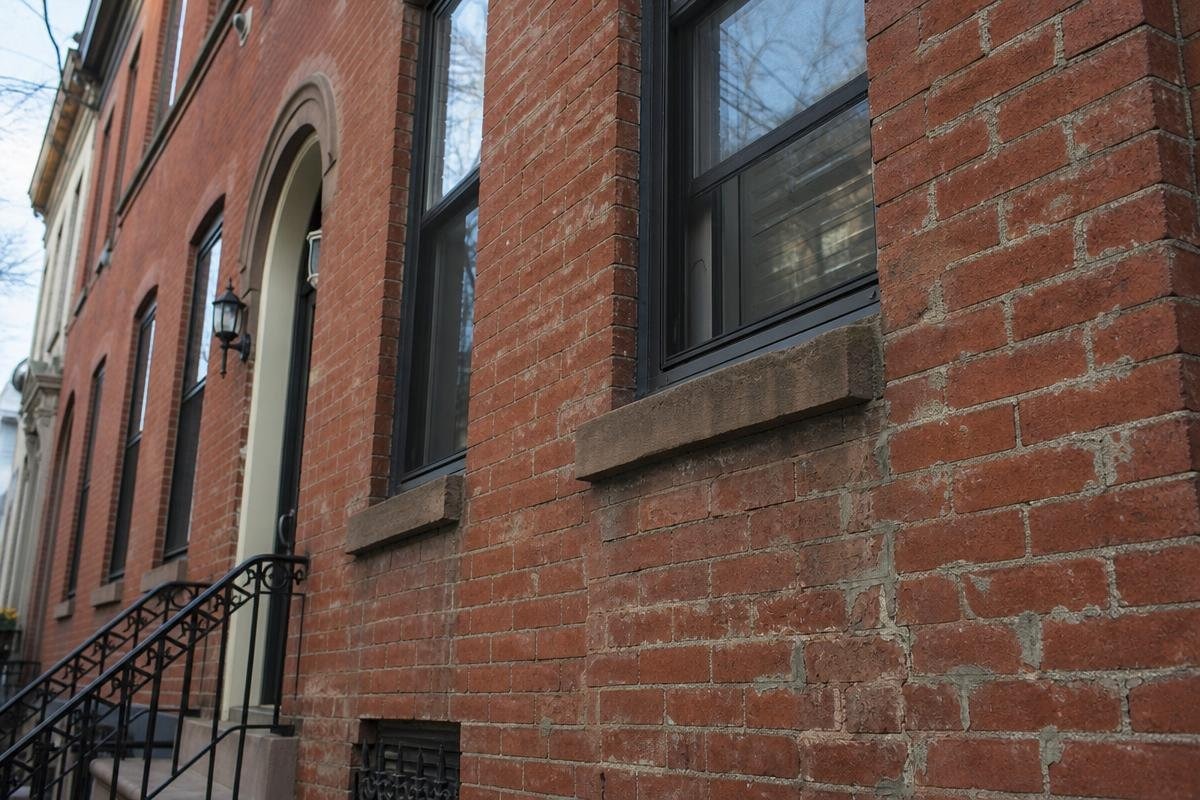
8 Building Repairs NYC Landlords Should Never Delay
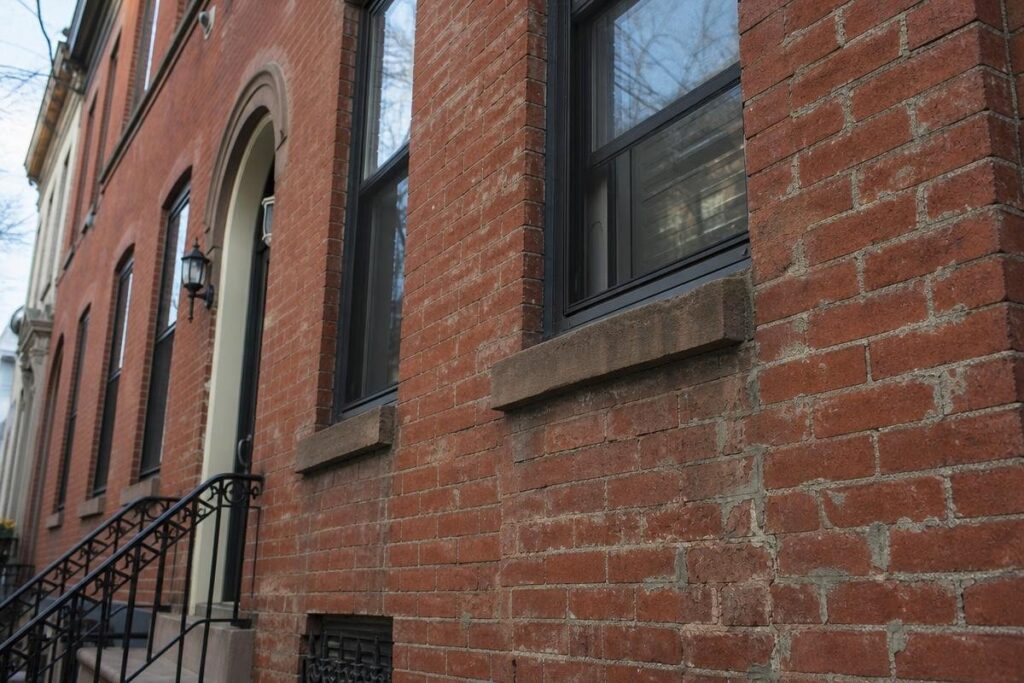
NYC landlords know the neighborhood’s brick buildings look solid. They are, until they aren’t. Mortar joints crack, facades absorb water, and cast-iron stacks corrode quietly behind finished walls. By the time a tenant reports a problem, the building repair bill has already doubled. Melani General Contractor works on these older NYC properties year-round, from Brooklyn to the outer boroughs, and we see the same eight repairs deferred again and again.
This post covers those repairs, why each one compounds fast in Brooklyn’s climate, and what the work actually involves so you can make an informed call before a small defect becomes a structural problem. Seeing cracks, water stains, or failing mortar on your NYC building? Get eyes on it before it gets worse.
Key Takeaways
- Delayed building repair in NYC typically costs two to four times more than early intervention.
- Brooklyn’s 20 to 30 freeze-thaw cycles per winter accelerate mortar joint failure in older masonry faster than most landlords expect.
- Eight specific repair categories account for the majority of deferred-maintenance violations and emergency calls in NYC’s older housing stock.
- Some repairs require NYC Department of Buildings permits; skipping them creates open violations that follow the deed.
- Cast-iron plumbing, aging electrical systems, and plaster ceilings in early 20th-century buildings need specialists, not general handymen.
An owner pulls a renovation permit, swings a hammer through a plaster wall, and finds knob-and-tube wiring spliced into modern Romex, a beam notched halfway through for a bathroom drain, and a closet that does not appear on any filed drawing. That is the moment most Brooklyn homeowners realize they have no map for what comes next. A NYC DOB inspection is the city’s check that the work matches the approved plans, the code, and the filings on record. Fail one, and the project stops cold: stop-work order, fines, sometimes a demand to tear out finished work and redo it under proper filings.
A Small Crack in the Mortar. A $15,000 Problem by Spring.
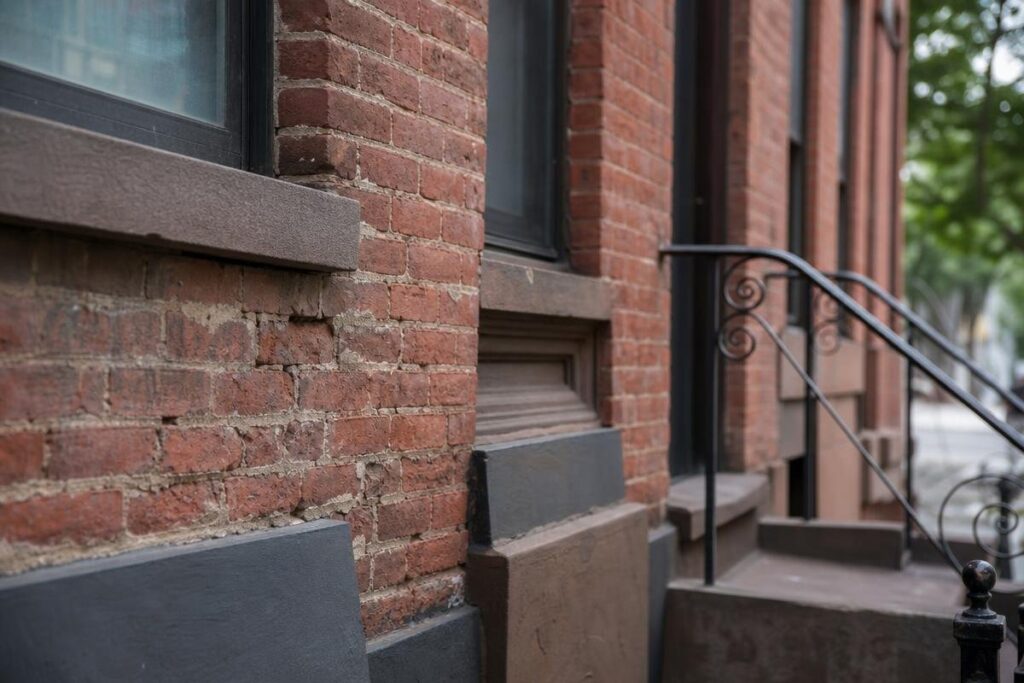
A tenant in a unit in an older NYC building calls about water staining on the bedroom ceiling. The landlord adds it to the list. Three months later, a NYC Department of Buildings inspector arrives for an unrelated complaint and flags a bowing parapet. The repair estimate comes back at $18,000. The original mortar joint failure that let water in cost $600 to fix a year ago.
That is not a worst-case scenario. In older Brooklyn buildings, it is a pattern. Brick rowhouses and two-to-four-family attached homes built between 1910 and 1945 were constructed with materials that depend on each other. When mortar fails, water enters. When water enters, it reaches cast-iron drain stacks, plaster-on-lath ceilings, and aging electrical systems. Whatever is hiding behind the walls starts to move. A single deferred repair becomes three.
NYC also adds a layer that simply does not exist in most other markets: daily DOB fines, mandatory vacate orders, and emergency building repair in NYC at premium rates when a landlord runs out of time. A repair postponed for a season can escalate from a routine service call into a five-figure gut job plus penalties within twelve months.
This article covers eight building repair categories, why each one escalates in older NYC properties, and what the practical response looks like for landlords managing the city’s housing stock.
Why Deferred Maintenance Costs More in NYC Than Almost Anywhere Else
Deferred maintenance costs more in NYC because DOB violations generate daily civil penalties that begin accruing immediately, independent of any repair timeline. Skipping a repair in most markets means the problem gets worse. Skipping a repair in New York City means the problem gets worse and the city starts billing you for it. A $400 masonry patch that sits on a to-do list for two months can generate more in civil penalties than the repair itself.
The DOB Violation Multiplier
The NYC Department of Buildings classifies violations in three tiers. Understanding the difference matters because the financial exposure at each tier is not equal:
- Class A (non-hazardous): Administrative violations. Penalties are lower, but they still accrue.
- Class B (hazardous): Daily civil penalties begin immediately upon issuance. These are not deferred until a hearing.
- Class C (immediately hazardous): Penalties range from $50 to $150 per day, per violation, under the NYC Administrative Code. A single Class C violation left open for 60 days can cost $9,000 in fines alone, on top of the repair.
The violation class is not fixed. A leaking roof that reaches a tenant’s unit can be reclassified upward as conditions deteriorate. What starts as a Class B can become a Class C before an inspector returns. Landlord building repairs in Brooklyn that involve facades, parapets, or roof assemblies carry the highest reclassification risk, because structural and weather-related failures escalate visibly and quickly.
Have an open DOB violation? Melani General Contractor can assess and remediate before penalties compound. Call (718) 283-4154 for a same-day assessment.
How Tenant Liability Changes the Math
NYC Housing Maintenance Code requires landlords to keep buildings in good repair at all times. That obligation is not triggered by an inspector’s visit. It exists continuously.
A written repair request from a tenant is documentary evidence. The moment a tenant emails or texts about a defective condition, the landlord has documented notice. If an injury occurs after that notice and no repair was made, the landlord’s knowledge of the defect is no longer in dispute. That removes the single most common defense in premises liability cases.
Staying ahead of these issues is exactly what a property maintenance contractor in NYC is built to handle before complaints become court filings.
The 8 Building Repairs NYC Landlords Should Never Delay
Pre-war rowhouses and two-to-four-family brick buildings across NYC come from that era of construction. Cast-iron stacks, plaster ceilings, single-wythe brick facades, and original electrical service are not exceptions. They are the norm in this building stock. Each repair category below is more urgent in that building stock than in anything built after 1980. Here is what escalates, why it escalates, and what to do first.
1. Roof and Parapet Wall Failures
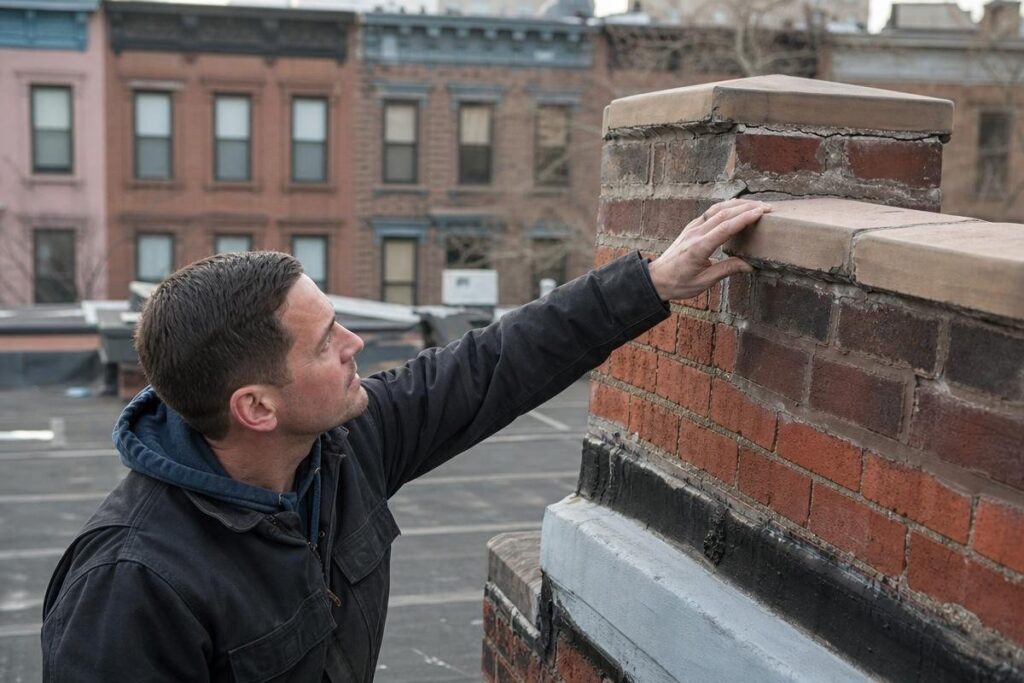
Flat and low-slope built-up membrane systems on older rowhouses have a service life of 15 to 20 years. Most have not been replaced on that schedule. Parapet walls on buildings under six stories are not covered by Local Law 11, but that does not eliminate liability when a brick or coping stone falls to the street.
Consequences of delay:
- Tenant injury claims from falling masonry
- Interior water damage that spreads to multiple floors within one season
- DOB emergency violations that require immediate repair under a licensed contractor
The practical default is to schedule a roof membrane and parapet inspection every three years, not after a leak appears. For active failures, emergency building repair in NYC is the only appropriate response.
2. Plumbing Leaks and Drain Line Deterioration
Original cast-iron drain stacks from the 1920s through the 1950s corrode from the inside out. The exterior looks intact. The interior is scaled, cracked, or partially collapsed. A slow leak behind a wall starts mold growth within 24 to 72 hours.
Consequences of delay:
- Mold remediation costs that far exceed the original pipe repair
- HPD violations for defective plumbing conditions
- Tenant rent-reduction applications tied to chronic leak complaints
The practical default is camera inspection of any cast-iron stack showing slow drainage or recurring clogs. Do not patch. Investigate. Our licensed plumbing services in NYC cover full stack replacement and liner repair.
3. Electrical Panel and Wiring Deficiencies
Sixty-amp fused service panels predate modern load requirements by decades. A documented written complaint about flickering lights or tripped breakers that goes unanswered creates a fire-liability record. That record follows the building through any future sale or litigation.
Consequences of delay:
- Electrical fire risk in walls containing knob-and-tube or early Romex wiring
- Insurance coverage disputes after a fire if deferred maintenance is documented
- HPD Class C violations for hazardous electrical conditions
The practical default is panel upgrade to 100-amp or 200-amp service with a full inspection of branch circuits. Our team handles electrical services for NYC buildings from panel replacement through full rewiring.
4. Facade and Pointing Deterioration
Mortar joints have a 25 to 30 year service life under NYC freeze-thaw cycling. Brooklyn sees 20 to 30 freeze-thaw cycles per winter. Weather-exposed elevations take on higher wind-driven rain loads, which shortens that service life further. Pointing recessed more than 3/4 inch or cracking brick faces require immediate repointing.
Consequences of delay:
- Water infiltration through deteriorated joints into interior wall assemblies
- Accelerated moisture damage in adjacent attached rowhouses through shared party walls
- Brick spalling that requires full course replacement rather than repointing alone
The practical default is to repoint any joint showing recession or cracking before the next winter season, not after it.
5. Boiler and Heating System Failures
NYC law requires 68 degrees Fahrenheit between 6 a.m. and 10 p.m. when outdoor temperatures fall below 55 degrees, and 62 degrees overnight. A boiler failure in January is a same-day Class C violation. Fines begin immediately and accumulate daily until heat is restored.
Consequences of delay:
- Class C immediately hazardous HPD violations with daily fines
- Emergency repair costs that run two to three times the cost of scheduled maintenance
- Tenant claims for alternative housing expenses during heat outages
The practical default is annual boiler servicing before October 1, with documented records kept on file.
6. Water Damage and Ceiling Collapse
Plaster-on-lath ceilings common in early 20th-century Brooklyn buildings can hold water for weeks before failing. The ceiling looks stained. Then it falls. Collapse while a tenant is present is a personal injury liability event, not a maintenance issue.
Consequences of delay:
- Personal injury claims with no defensible position if prior water staining was visible
- Full ceiling replacement costs instead of targeted patch repair
- Mold growth in the cavity above the lath that requires remediation before any rebuild
The practical default is to treat any water stain on a plaster ceiling as an active structural warning. A property maintenance contractor in NYC can assess whether the ceiling assembly is still sound or needs immediate removal.
7. Structural Floor and Stair Defects
A stair tread that separates under load is an immediately hazardous classification under the NYC Housing Maintenance Code. Soft spots in wood-framed floors require immediate investigation, not monitoring. Whatever is hiding under the subfloor in a 1920s rowhouse may be far worse than the surface defect suggests.
Consequences of delay:
- Tenant falls resulting in personal injury liability
- HPD immediately hazardous violations requiring same-day correction
- Subfloor rot or joist failure that turns a stair repair into a floor rebuild
The practical default is to take any soft spot or loose tread out of service immediately and open the assembly for inspection within 48 hours.
8. Mold and Moisture Intrusion
NYC Local Law 55 of 2018, the Asthma-Free Housing Act, requires landlords to investigate and remediate indoor mold conditions. Chronic moisture sources in NYC’s older buildings of that vintage include failed window glazing, roof leaks, and condensation on uninsulated exterior walls. None of these resolve on their own.
Consequences of delay:
- HPD violations with mandatory remediation orders
- Tenant rent-withholding claims tied to documented mold conditions
- Remediation costs that increase significantly once mold spreads beyond the original moisture source
The practical default is to address the moisture source first, then remediate. Painting over mold does not satisfy Local Law 55 and creates a documented record of non-compliance.
How NYC’s Pre-War Building Stock Makes These Repairs More Urgent
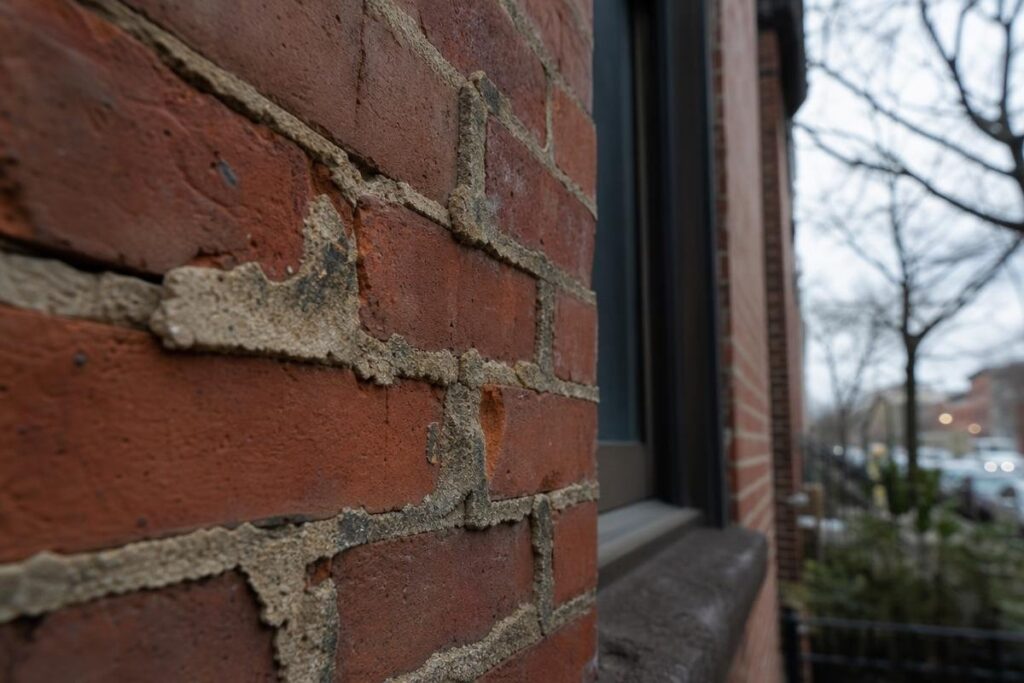
Much of NYC’s residential housing stock dates to the same early 20th-century era. That construction comes with a specific set of materials: single-wythe brick facades, plaster-on-lath ceilings, cast-iron drain stacks, and knob-and-tube or early Romex wiring. These are not vague references to older buildings. They are the physical conditions that determine repair scope, timeline, and cost on almost every job in this area.
Older Construction and What It Means for Repair Timelines
Opening a wall for a plumbing repair in a 1920s rowhouse routinely reveals something unexpected: deteriorated wiring, failed insulation, or framing damage from decades of slow moisture infiltration. Landlords who budget only for the presenting problem frequently find the actual scope is two to three times larger. A drain stack replacement can escalate into what a gut renovation actually involves in NYC if the surrounding conditions are bad enough.
This is not a worst-case scenario. It is the practical default in this building stock. Whatever is hiding behind the walls has been there for decades. Delaying the initial repair only gives it more time to spread.
The Freeze-Thaw Cycle and Brick Envelope Damage
Brooklyn experiences 20 to 30 freeze-thaw cycles per winter. Each cycle forces water trapped in failed mortar joints to expand approximately 9 percent as it freezes. That expansion widens the void. The next cycle widens it further. Over a single winter, a hairline crack in a mortar joint becomes a structural breach.
NYC’s coastal exposure adds another variable. Facades exposed to prevailing wind and weather absorb more moisture than sheltered elevations. Those walls should be the first ones inspected after each winter season, not the last. A property maintenance contractor in NYC familiar with this building stock will know exactly where to look.
Older buildings hide problems that estimates rarely catch on the first pass. Call (718) 283-4154 to schedule a building assessment before the next repair gets bigger than it needs to be.
What Happens When a Repair Requires a Permit in NYC
Many landlords treat permits as optional paperwork. They are not. Under the NYC Building Code, work that touches structural elements, plumbing systems, electrical systems, or the building envelope requires a filing with the NYC Department of Buildings before work begins. Cosmetic repairs, such as painting, flooring, or cabinet replacement, generally do not. If you are unsure where your repair falls, read about whether your NYC renovation requires a permit before you schedule any contractor.
Which Repairs Trigger DOB Filing Requirements
The practical default is to consult a licensed contractor before starting any repair that touches a wall, ceiling, floor structure, or mechanical system. The following categories almost always require a DOB permit:
- Structural repairs: lintel replacement, beam work, foundation work, parapet reconstruction
- Plumbing: drain stack replacement, supply line rerouting, fixture additions
- Electrical: panel upgrades, new circuits, service entrance work
- Building envelope: window replacements that alter the opening size, facade reconstruction
Work done without a required permit is not just a regulatory violation. It creates a title problem that surfaces at sale and can void a property insurance claim. NYC DOB violations attach to the property, not the owner. A buyer’s attorney will find them. A lender’s underwriter will flag them.
The Certificate of Occupancy Risk Landlords Overlook
A Certificate of Occupancy documents the legal use and occupancy classification of a building. Unpermitted work that changes the building’s configuration, plumbing fixture count, or egress path means the existing CO may no longer accurately reflect the building’s condition. This is not a technical footnote. It is a material defect.
CO discrepancies surface at sale, at refinancing, and when a DOB inspector responds to a complaint. Two-to-four-family buildings across NYC are particularly exposed because informal alterations from prior decades often were never permitted. A new repair that opens walls can expose that prior work, creating a compounded filing obligation.
The cost to legalize or demolish unpermitted work after the fact consistently exceeds the cost of filing properly before the work begins. For landlords managing ongoing repair obligations across multiple units, a property maintenance contractor in NYC who understands DOB filing requirements is not a luxury. It is basic risk management.
How to Prioritize Building Repairs When the List Is Long
Most landlords managing a two-to-four-family building in NYC are not dealing with one repair. They are dealing with twelve. The question is not whether to fix them. It is which ones to fix first, and who to call.
The Triage Framework for Immediate, Near-Term, and Planned Work
The practical default is to sort every item on your list into three buckets based on risk, not cost.
- Immediate (within 24 to 72 hours): Any life-safety condition. Heating failure during winter is a Class C violation from day one. Active water infiltration through a ceiling, stair structural failure, electrical arcing, or a burning smell all belong here. So does any condition with a written tenant complaint on record, or an active NYC Department of Buildings violation with an approaching cure date.
- Near-term (within 30 to 60 days): Roof and parapet conditions identified in a seasonal inspection, slow plumbing leaks that have not yet caused wall or ceiling damage, and pointing failures on primary weather-exposed facades. These are not emergencies today. With another 90 days, several of them become emergencies.
- Planned (within the current fiscal year): Electrical panel upgrades in buildings still running original service, boiler component replacement before heating season, and facade repointing on secondary exposures. Schedule these on your terms before conditions force the issue.
A good starting resource for understanding which repairs trigger permit requirements is our guide on whether your NYC renovation requires a permit, since permit timelines affect scheduling decisions for near-term and planned work.
When to Call a General Contractor Instead of a Specialty Trade
For a single failed breaker or an isolated leaking pipe, call the licensed specialty trade directly. That is the right call. The calculus changes when opening one area is likely to expose conditions in adjacent systems.
In older buildings across neighborhoods like Park Slope and Sunset Park, a ceiling repair that starts as a plaster patch regularly requires a plumber, an electrician, and a finish carpenter before it is closed. Managing that sequence yourself means scheduling gaps, duplicated demo work, and missed inspections.
A general contractor coordinates the sequence, holds the permit, and keeps the job moving. For that type of compound repair, our full renovation and repair services in NYC are structured exactly for it.
Frequently Asked Questions
What counts as an emergency building repair under NYC law?
Any Class C condition under NYC’s Housing Maintenance Code qualifies as immediately hazardous. That includes loss of heat or hot water, structural failure, gas leaks, and sewage backups. HPD can order emergency building repair in NYC at the landlord’s expense if the landlord fails to respond within the required window.
How quickly must a landlord respond to a tenant repair complaint?
Response windows are set by violation class:
- Class C (immediately hazardous): 24 hours
- Class B (hazardous): 30 days
- Class A (non-hazardous): 90 days
Missing these deadlines triggers daily civil penalties. HPD can also dispatch its own contractors and bill the landlord at above-market rates. Neither outcome is recoverable.
Do building repairs in NYC require a licensed contractor?
It depends on the trade. Plumbing requires a licensed master plumber. Electrical requires a licensed electrician. Structural work often requires a licensed engineer of record. Any general contractor coordinating multi-trade repairs must hold a valid NYC Home Improvement Contractor license. Hiring unlicensed workers transfers liability directly to the property owner.
What is the difference between a building repair and a renovation?
A like-for-like replacement is a repair. Replacing a cast-iron drain stack with the same configuration is a repair. Moving that drain line is a renovation and requires a NYC Department of Buildings filing. The line is not always obvious before work starts. A licensed contractor should assess scope before any work begins. For context on where that line falls, see what a gut renovation actually involves in NYC.
Can a landlord pass repair costs to tenants in a rental building?
No. NYC landlords are legally required to maintain rental properties at their own expense under Housing Maintenance Code. The Major Capital Improvement rent increase is a narrow exception for rent-stabilized buildings. It requires HPD approval and applies only to qualifying improvements, not routine repairs. Routine building repair costs stay with the owner.
How do I know if a building repair needs a DOB permit in NYC?
Any work touching structural elements, plumbing, electrical, HVAC, or a building’s exterior envelope requires a NYC Department of Buildings permit. Cosmetic work does not. Unpermitted work found during a sale, refinancing, or DOB inspection can require costly legalization or full demolition. If there is any doubt, check before starting. Our page on whether your NYC project requires a permit covers this in detail.
Building repair in NYC moves fast once a condition is documented. A written tenant complaint, a DOB inspector’s visit, or a ceiling that starts to bow are not the beginning of the problem. They are the point where the cost curve turns steep. Our team works with landlords across Park Slope, Sunset Park, and surrounding neighborhoods to assess conditions, pull permits where required, and coordinate the trades needed to close violations before damage compounds.
We are based at 343 4th Ave, Park Slope, Brooklyn, NY 11215, and available for property maintenance and repair around the clock. Call (718) 283-4154 to schedule an assessment before the list gets longer.
Ready to Get Started with Melani General Contractor?
Call (718) 283-4154 to speak with our team directly. We’re ready to answer your questions, walk you through your options, and help you find the right solution for your needs. Whether you’re just starting to plan or ready to move forward, we’ll make the process simple and stress-free.
Reach out today and let’s talk about how we can help.