
DOB Permit Filing and Compliance
We file all required permits with the Department of Buildings and coordinate inspections from demolition through certificate of occupancy. You don't touch the paperwork. We do.
Melani General Contractor has delivered licensed general contracting in Queens for 22+ years, handling everything from gut renovations to full apartment buildouts. We hold a Home Improvement Contractor (HIC) License (#2113624-DCA), carry full insurance, and file directly with the NYC Department of Buildings (DOB) on permitted jobs. Queens has one of the most varied housing stocks in the city. Cast iron stacks, co-op alteration agreements, and mid-century brick construction all require a contractor who knows the borough's specific conditions. We do.
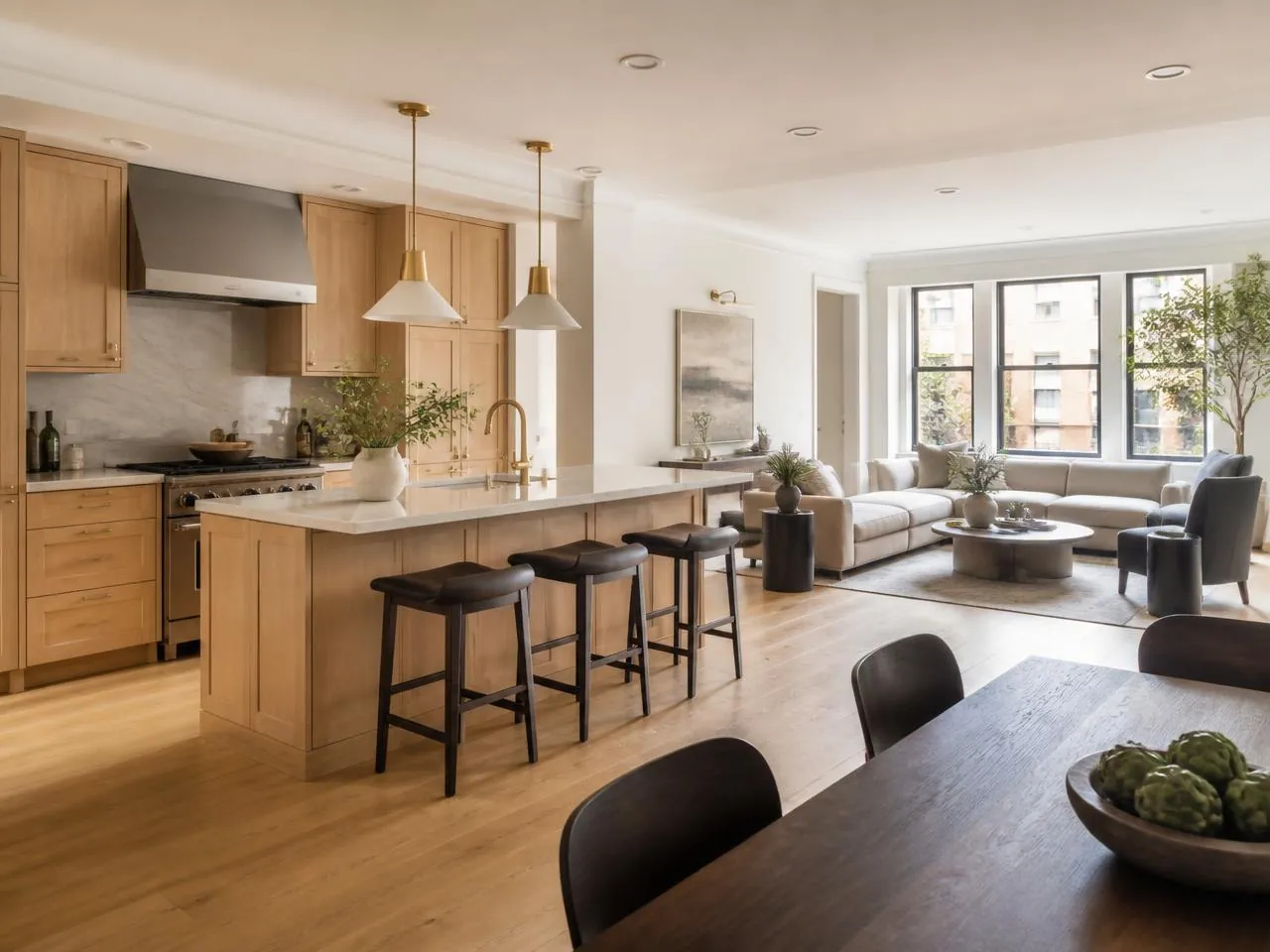
Ready to start your Queens renovation? Talk to our team today.
General contracting in Queens covers permit filing, trade coordination, demolition, structural work, and finish installation under one licensed contractor. On a renovation project we coordinate design, file permits with the NYC Department of Buildings (DOB), schedule licensed trades, and manage final inspections from start to finish. Every building carries its own structural realities and filing requirements, which is exactly why a licensed general contractor needs local knowledge, not just construction experience.
The coordination challenge here is real. Shared plumbing risers, cast iron stacks in older pre-war stock, and co-op alteration agreement timelines in buildings across Rego Park and Kew Gardens all affect how a project is sequenced. A home renovation can stall fast if the contractor does not account for board approval windows before scheduling a demo. We keep one point of contact, one schedule, and one accountable team so nothing falls between trades.
Here is what falls under one roof:
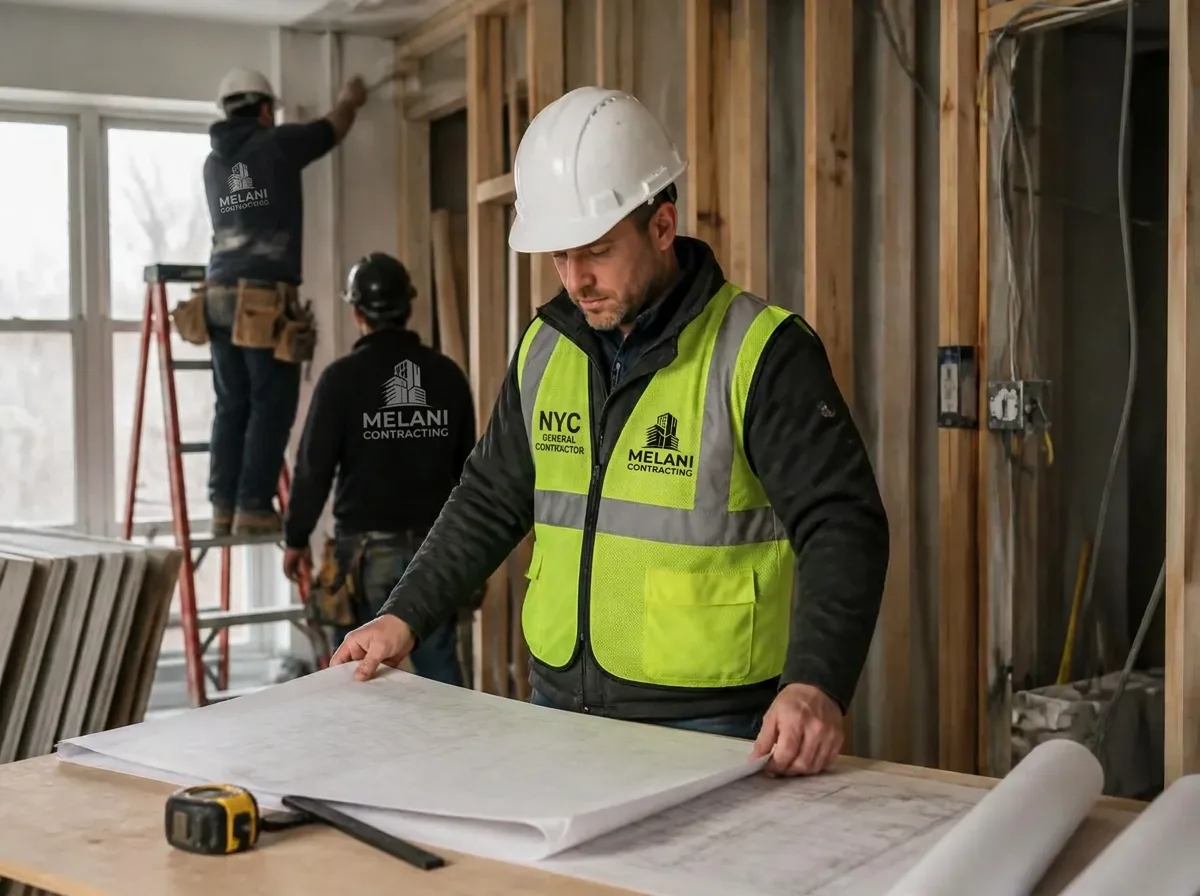
One team handles every trade, every inspection, and every sign-off. That is how a gut renovation stays on schedule. Here is exactly what we deliver.
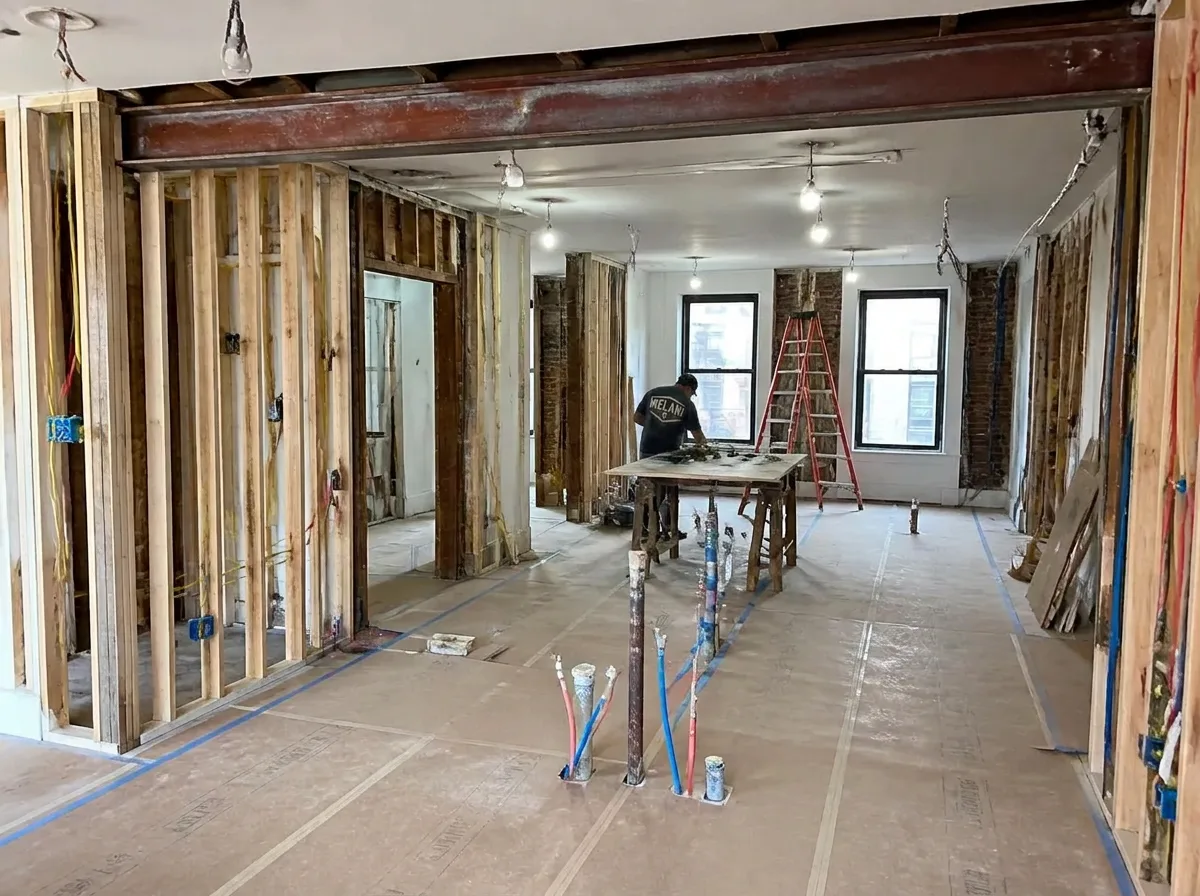
We file all required permits with the Department of Buildings and coordinate inspections from demolition through certificate of occupancy. You don't touch the paperwork. We do.
We handle load-bearing wall removal, custom millwork, and framing across building types in Queens. Each job gets drawings from a licensed professional engineer where the DOB requires them.
Full bathroom renovation and kitchen work includes cabinet installation, tile setting, plumbing rough-in, and fixture selection. We manage the demo through a final walk-through under one roof.
We coordinate licensed electricians and plumbers for panel upgrades, outlet installation, and stack work. Pre-war buildings in Woodside often have cloth wiring and cast iron stacks that require careful sequencing. See our electrical services for specifics.
We install hardwood, engineered wood, porcelain tile, and luxury vinyl plank. Older buildings frequently need subfloor leveling before any finish material goes down. Our flooring installation work accounts for that from the start.
Interior painting, trim installation, and finish carpentry are handled by the same crew that completed the rough work. Our painting services use the same licensed contractor that Queens property owners rely on for structural trades.
Every project we take on generally follows a four-step sequence. Standard steps are followed as applicable. That discipline helps keep jobs on schedule, on budget, and clear of violations.
We visit the property first. We identify the building type, check shared party walls, locate plumbing stack positions, and assess electrical panel capacity. A pre-war attached row house in Forest Hills and a mid-century brick building in Flushing each present different constraints. We define the full project scope before any contract is signed.
We file required DOB permits and handle alteration agreement submissions with co-op boards and managing agents directly. This step can delay projects when handled by inexperienced contractors. We know the documentation Rego Park and Jackson Heights co-ops require, and we submit complete packages.
Our crew handles demo and framing; licensed plumbers, electricians, and HVAC professionals handle regulated rough-in work under our direct supervision. We coordinate these trades to reduce the scheduling gaps that inflate timelines.
Finish carpentry, tile, flooring, painting, and fixture installation follow in sequence. We schedule the final DOB inspection and walk the property owner through every completed item before close-out. Nothing is marked done until you sign off.
Planning a Queens co-op renovation? We handle the board paperwork and alteration agreement from the start. Request a scope estimate today.
Some projects are straightforward. Others cross a line where managing separate subcontractors yourself stops being practical and starts costing you money. Here are five situations where hiring a licensed contractor in Queens is the right call.
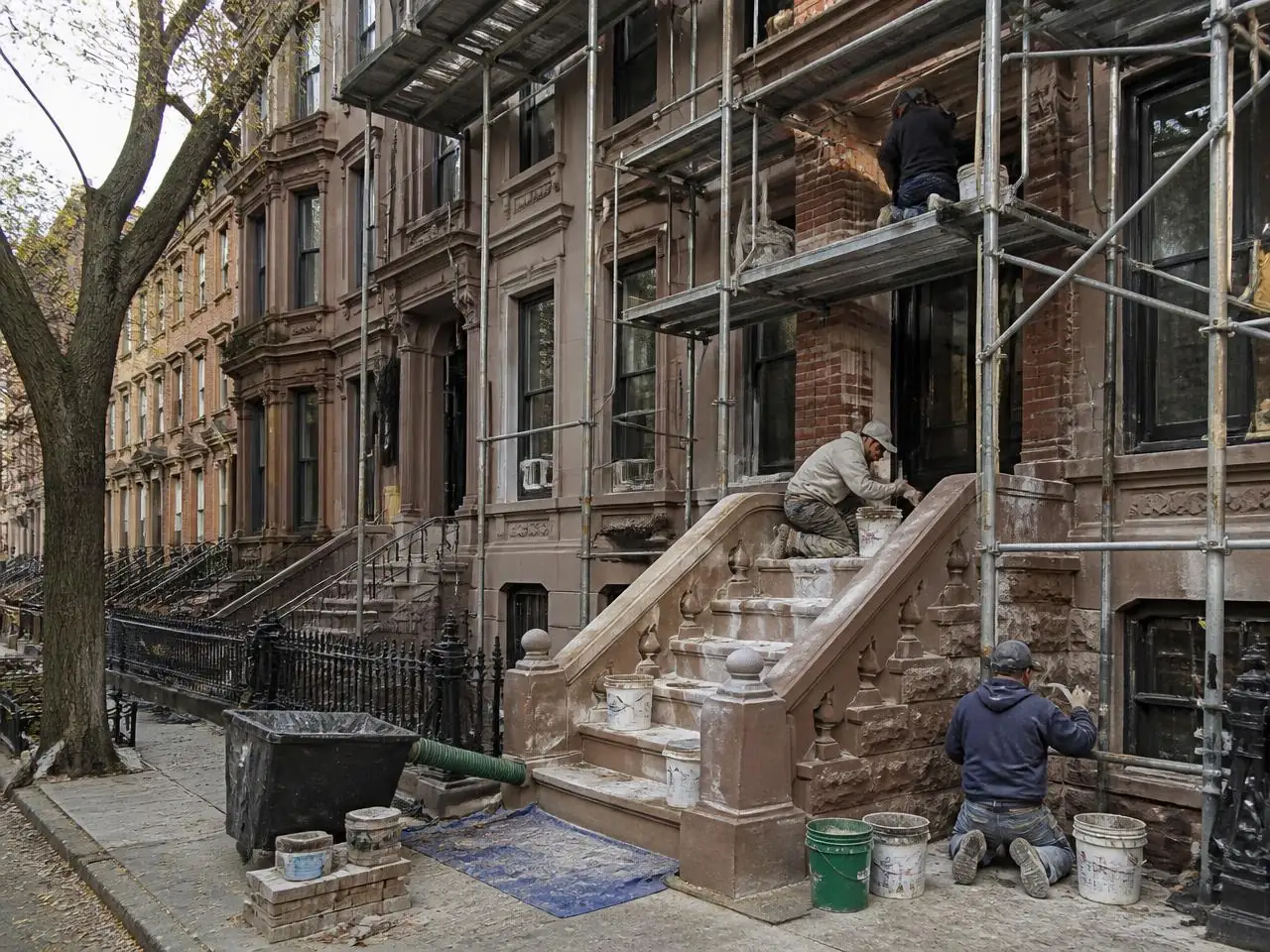
A kitchen or bathroom renovation that involves moving a drain line and upgrading circuits needs both trades working in sequence. Without a GC coordinating the schedule, plumbers and electricians show up out of order, work gets redone, and inspections fail. That costs more than the GC's fee.
A significant gap between bids usually means no one has defined the full scope. A GC assesses the project first, documents exactly what needs to happen, then coordinates trades to that defined scope. The quotes stop varying when everyone is pricing the same work.
Structural changes, bathroom additions, and electrical panel upgrades may require filings with the Department of Buildings. Incorrect or missing permits can trigger stop-work orders. We coordinate local law compliance to help prevent your project from stalling at inspection.
Older row houses in Richmond Hill may reveal water damage, mold, or compromised framing once demo begins. A GC can coordinate assessment of structural integrity and remediation before finish work starts. Skipping that step risks finishing over a problem.
Many Queens co-op boards require a licensed Home Improvement Contractor (HIC) listed in the alteration agreement before work begins. An unlicensed contractor can jeopardize board approval and halt the project.
Queens has one of the most varied housing stocks in the city, and that variety can create real complexity on a job. Mid-century brick apartment buildings sit a few miles from converted loft spaces in Long Island City. Post-war two-family homes in Howard Beach have completely different structural systems than the attached row houses in the Richmond Hill area. Each type carries its own plumbing configuration, framing method, and finish requirement. A contractor who works only one building style will hit walls fast here.
Older buildings along the Sunnyside and Elmhurst corridors may contain cast iron plumbing stacks, cloth wiring, and plaster-over-lath walls. These are common conditions in some Queens residential buildings. Cast iron stacks require careful handling during a bathroom renovation, because cutting into them incorrectly can damage shared risers and trigger building-wide complaints. Cloth wiring may require an electrical upgrade conversation with the DOB during permit review. Demo sequencing, permit strategy, and material selection can shift once these conditions are confirmed.
The borough's high-density layout adds another layer. Party walls, shared plumbing risers, and proximity to neighboring units require tight noise, dust, and vibration management throughout construction. Co-op condo renovation adds coordination overhead on top of that: building management rules govern working hours, elevator use, and material staging. A solo subcontractor rarely has the systems to track all of it. A GC does.
Our team has managed these Queens-specific conditions across kitchens, bathrooms, gut renovation, and commercial fit-outs for 22+ years.
Melani General Contractor has been handling apartment renovations, kitchen and bathroom renovation nyc, and commercial work across Queens and all five boroughs for 22+ years. That track record shows up in consistently strong client feedback. Learn more about our team and what that experience means on a Queens job site.
We coordinate every trade under our direct supervision. One schedule. One point of contact. Our crew handles demo, carpentry, tile and finishes; licensed plumbers and electricians handle regulated work under our direct supervision. That matters in a borough this varied, where a brick building in Flushing and a two-family in Howard Beach each carry different structural and permit requirements. Our base at 343 4th Ave, Brooklyn, NY 11215 helps us coordinate site visits and change orders across the Queens neighborhoods we serve.
Contractor availability is tight across the borough. Timelines slip fast when crews don't show. Our customers say it differently: "the work is done quickly and correctly" and "Thanks for being so prompt with our urgent repair need." The team answers for every phase. That accountability is one reason customers keep calling back.
Explore our other services in Queens.
Our general contracting and home renovation work is based in Brooklyn, but we serve property owners across all five boroughs. Wherever your project is, we bring the same permitting know-how, licensed trades, and direct oversight.
Property owners in Howard Beach, Flushing, Woodside, and Long Island City can reach us directly to discuss project scope. Visit our contact page or call (718) 283-4154. We work from our base at 343 4th Ave, Brooklyn, NY 11215, serving all of Queens.
Most structural, electrical, plumbing, and addition work requires a permit from the NYC Department of Buildings (DOB). Cosmetic work like painting, cabinet replacement, and flooring typically does not. We file all required permits as part of the project scope. Unpermitted work leads to stop-work orders, fines, and complications when you sell the property.
A kitchen remodeling or bathroom renovation timeline depends on permit approval and trade scope. A full gut renovation of a Queens apartment or row house can take longer. DOB permit review and co-op board approval are common timeline extensions. We account for both in the project schedule from day one.
Yes. We coordinate alteration agreement submissions with co-op boards and managing agents, including licensure proof, insurance certificates, and full project scope documentation. Many Queens co-ops in Kew Gardens and Elmhurst have specific contractor approval processes. We know what those boards require and submit complete packages.
We work on attached row houses, mid-century brick apartment buildings, post-war two-family homes, and co-op condo renovation throughout Queens. Commercial spaces along corridors like Jamaica Avenue and Northern Boulevard are also within our scope. Each building type carries its own structural and regulatory requirements, and we assess those conditions before any work begins.
Costs vary by scope, building type, permit requirements, and material selections. A bathroom renovation can range from a cosmetic refresh to a full gut with new plumbing and electrical. Our pricing falls in the mid-range to upper-mid-range, reflecting licensed trade work and permit-compliant execution. You receive a clear written scope and price before any work starts, and we communicate promptly if conditions change.
Yes. We hold a Home Improvement Contractor (HIC) License, full liability insurance, and workers' compensation coverage. Proof of all credentials is provided to co-op boards, managing agents, and property owners as standard project onboarding. That documentation is ready to go the moment you need it.
Ready to talk through your Queens project? Call us at (718) 283-4154 or visit our contact page to describe your scope. We will assess the building conditions, identify what permits are required, and give you a clear plan before any work begins.